How a nineteenth-century masterpiece, an ancient Eastern concept, and a pair of scissors reveal the ultimate manual override for modern static.
The Day the Ego Broke: Monet, Māyā, and the Mechanics of the Arrest
Many years ago—in my early days, though not that early, as I was in my thirties—I found myself back in Dunedin.
What was new about this trip was my accommodation. I was sleeping, likely on the floor, in a flat directly above a public art gallery. The space was occupied by a young man who was a newly appointed curator. At that exact moment, the gallery was in the high-stakes process of hanging a blockbuster international exhibition: classical and modern masterpieces from the superb, world-renowned collection of Baron Thyssen-Bornemisza.
The next morning, driven by casual curiosity, I wandered downstairs and through the gallery doors to see what the layout was all about.
Near the very beginning of my tour, I encountered a canvas that simply changed everything. My burgeoning ego—the part of the mind that constantly seeks to analyze, categorize, and assert its own cleverness—was instantly subdued. I found myself pinned to the floor in the presence of an image for which I had absolutely no logical explanation.
The painting was Claude Monet’s The Thaw at Vétheuil, captured during the brutal, freezing European winter of 1880. It depicted a river breaking free from its icy prison, the surface just starting to churn and come alive after the deep winter freeze.
I spent hours there. In fact, I spent so much time captured by it that I eventually had to sit down just to safely absorb the sheer volume of feelings the image was releasing into me. What utterly fascinated the technician in me was the movement: no matter the angle I chose, or from what distance I measured it, the canvas appeared to actively flow. I found myself viewing it from extreme side angles, head-on, stepping up close to the brushwork, and then backing away to catch the horizon. The composition refused to stand still.
Little did I know it at the time, but I was experiencing my very first live field-test of what the mythologist Joseph Campbell termed Aesthetic Arrest—a concept he beautifully linked to the ancient Eastern mechanics of piercing the veil of Māyā.
In that room, the frantic, transactional static of the everyday world was completely short-circuited. I never even thought to note the artist’s name or read the clinical curatorial details on the wall placard; the sheer velocity of the arrest completely overwhelmed the desire to document it. In that silent gallery, the analytical technician stepped back, and the deep, sub-surface watering of the seeds of self-awareness truly began.
The Architecture of the Veil: Campbell, Joyce, and the Matrix of Māyā
James Joyce wrote several notable books, including “Ulysses,” “A Portrait of the Artist as a Young Man,” “Dubliners,” and “Finnegans Wake.” His works are celebrated for their innovative style and deep exploration of human consciousness.
To understand the sudden stillness that occurred on that gallery floor in Dunedin, we have to look through the lens that Joseph Campbell spent his entire lifetime grinding and polishing: the intersection of ancient Eastern myth and Western creative genius.

Campbell’s great illumination was realizing that the ancient Indian concept of Māyā is not merely a philosophical abstraction. It is a psychological reality that governs our everyday, high-RPM existence.
In traditional Sanskrit, Māyā is frequently translated as “illusion,” but its etymological root actually means “to measure.” It is the cosmic system function that takes the vast, unified, silent energy of the universe and fragments it into measurable parts: past vs. future, subject vs. object, desire vs. fear.
Māyā is the ultimate high-resistance circuit. It creates the daily static—the urgent deadlines, the societal expectations, and the constant mental chatter that keeps us running on a perpetual hamster wheel of striving. Under the influence of Māyā, our internal processors are locked in high gear, constantly reacting to external stimuli, leaving zero room for stillness. Just like the marketing paradigm distilled over centuries intended.
The Joycean Circuit Breaker
Campbell’s breakthrough came when he aligned this Eastern concept with James Joyce’s aesthetic theory. Joyce argued that the true purpose of “proper art” is to induce an Aesthetic Arrest.
Most things in the Western world move us kinetically—they either make us want to possess something (the pornographic trap of desire) or push us to fear and judge something (the didactic trap of loathing). Both states keep us firmly bound within the prison of Māyā’s measurements.

The Thaw at Vétheuil
Monet’s Canvas as the “Circuit Breaker”
When I stood in front of The Thaw at Vétheuil, there was no theological script to run. There was no moral lesson being preached, no guilt being triggered, and no historical requirement to remember.
Because the image (as above, not even remotely like the original) was stripped of any “instructive” or “kinetic” baggage, my analytical mind had nothing to do. It couldn’t run a calculation or a memory loop. It had no choice but to blow a fuse and drop into Aesthetic Arrest. I wasn’t being told what to think; the sheer radiance of the light and movement simply forced you to stop thinking.
It represents the sudden breakout—the moment the river thaws, the scripts dissolve, and the absolute stillness of reality takes over.
Image attribution – WikiArt
The Stations of the Cross as a “Kinetic Script”
The Stations of the Cross are, by design, didactic. They were originally created in medieval Europe as a visual tool for a population that couldn’t read the text. Their primary function is to move the viewer through a specific emotional and moral sequence: guilt, sorrow, duty, and devotion.
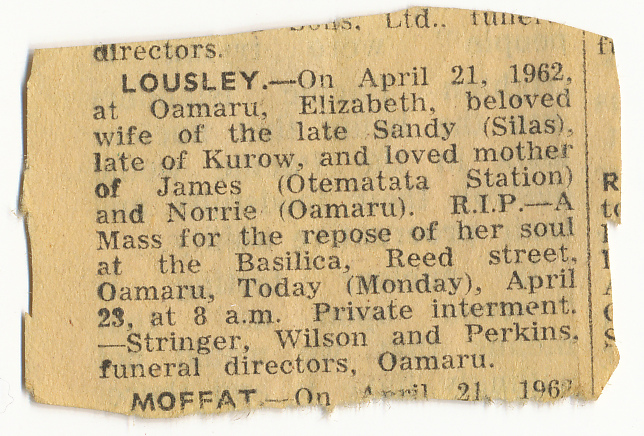
The Basilica, Oamaru
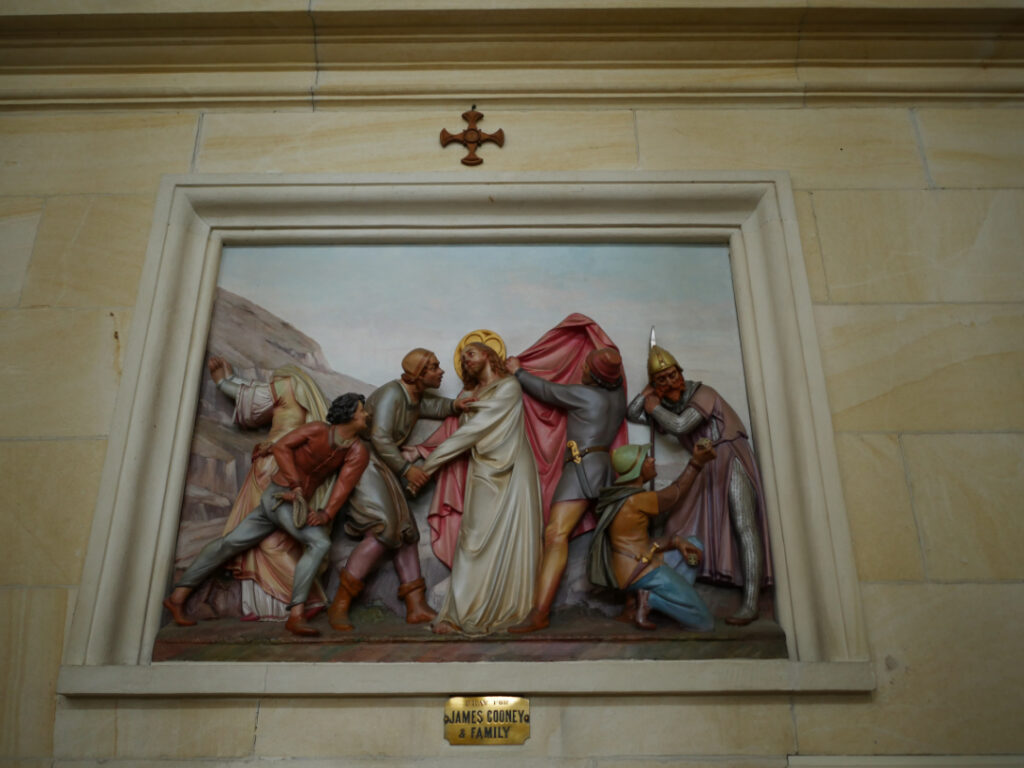
When you look at those statues, your mind isn’t meant to stop and rest in absolute, non-judgmental stillness. It is meant to run a pre-programmed religious and historical script. It forces your intellect to remember a story, weigh your actions, and feel a kinetic push toward a specific moral conclusion. It keeps the mind moving along a track.
The Statues: Represent the world of structure, form, instruction, and the early grooving of the young observer’s mind.
Playing to Learn: The Practical Application of the Discontinuity
So far, we have looked at the mechanism where a great work of art—be it music, a canvas, a perfectly cast fly line over a trout pool, or a cleanly carved ski line down a mountain face—induces this state of stillness from the outside in.
But I have discovered that Aesthetic Arrest can be actively deployed as a tool. The underlying requirement for this is developing a sharp instinct for pattern recognition.
The Cafe Experiment: Grounding the Circuit
Imagine you are sitting in a busy cafe. A barista you know slightly catches a brief lull in service, and you observe her begin a task that requires a highly focused, repetitive pattern of concentration—perhaps a stock take in a notebook. As she walks past your table, navigating a tight space close enough for a quiet, succinct remark, you drop a completely unexpected variable into her field: you ask if she would like your autograph in her notebook.
My bet is that this instantly springs a moment of total grounding. The automated, high-RPM task loop she was running is suddenly broken. The present moment lands completely, and the immediate energy in that vicinity changes from transactional noise to shared stillness. It is a playful, zero-drag way to use the concept.
The Institutional Ward: The Architecture of Survival
But this same tool can have a far deeper, more critical application in high-stakes environments. Consider an introspective child lost within a dysfunctional family structure, or one who has suddenly been siphoned off into an unfamiliar, sterile institution. The child is powerless and must figure out how to get basic needs met without drawing hostility.
While engaging in loud, disruptive choices might be an obvious instinct, the child quickly learns that high-friction behavior usually yields punitive results. But if that child steps back into the “Observer’s Hangar” and quietly maps the patterns of the adults in the room, a sophisticated alternative emerges. By introducing a gentle, absurd discontinuity—the psychological equivalent of an eight-year-old looking up from a hospital bed and asking a busy nurse, “Would you like my autograph on my medical chart?”—the rigid institutional script is instantly broken. It is playful on the surface, but for a vulnerable system, it is a serious business of establishing safety through human connection.
The Wild Card: De-escalation by Design
I am reminded of a story involving a late friend of mine. Many years ago, he found himself at a New Year’s Eve celebration at a local hotel—a venue notorious for the kind of volatile conduct that bubbles up when holiday celebrations get out of hand. The local manager approached my friend’s group, his posture likely tense, carrying the heavy momentum of a man trying to brace for a chaotic situation.
My friend was always a bit of a wild card, completely sober, and highly attuned to the room. Before the manager could run his standard confrontational script, my friend reached out, grasped the manager’s tie, and with a pair of scissors that happened to be within arm’s reach, cleanly snipped the tie in half.
It was a move executed at immense risk; in a tense room, a pair of blades can easily be misinterpreted as a weapon. Yet, it pulled off a total miracle of de-escalation. The sheer, bizarre absurdity of the act broke the collective tension of the room, and everyone laughed. Because my friend and the manager knew each other, there may have even been a silent, unspoken collusion between them to defuse the larger room. By cutting the physical fabric of the manager’s uniform, he cut straight through the volatile momentum of the crowd. It was an aggressive, beautiful act of live-engineered Aesthetic Arrest.
The Two Modes of the Screen: To Consume or to Behold
In his final reflections, Joseph Campbell distilled this entire mechanism down to a beautifully simple, rustic contrast: The difference between looking at a magnificent turkey dinner as an art object, or simply eating it.
When we eat the object, we are fully locked inside the high-RPM machinery of daily survival. We are driven by desire, hunger, or perhaps the fear of lack. This is life in compulsive action—what the Eastern traditions call the projecting power of Māyā. The world remains an opaque, heavy obstacle course where we are constantly running a script of gaining or losing, succeeding or failing. Campbell calls this compulsive state the “Fall in the Garden”—the moment our consciousness shifts from stillness (stasis) into frantic, forced movement (kinesis).
But when we experience Aesthetic Arrest, the world does not physically change. Our consciousness changes.
Instead of viewing the world as something to be consumed, mastered, or feared, we suddenly look through it. The projecting screen of Māyā becomes a revealing lens. Like a technician probing for oil who suddenly strikes a deep artesian well, you realize that the silence—the radiance—is actually running beneath everything. It is under the workshop floor, beneath the busy cafe counter, and inside the quiet rooms of the institutional ward.
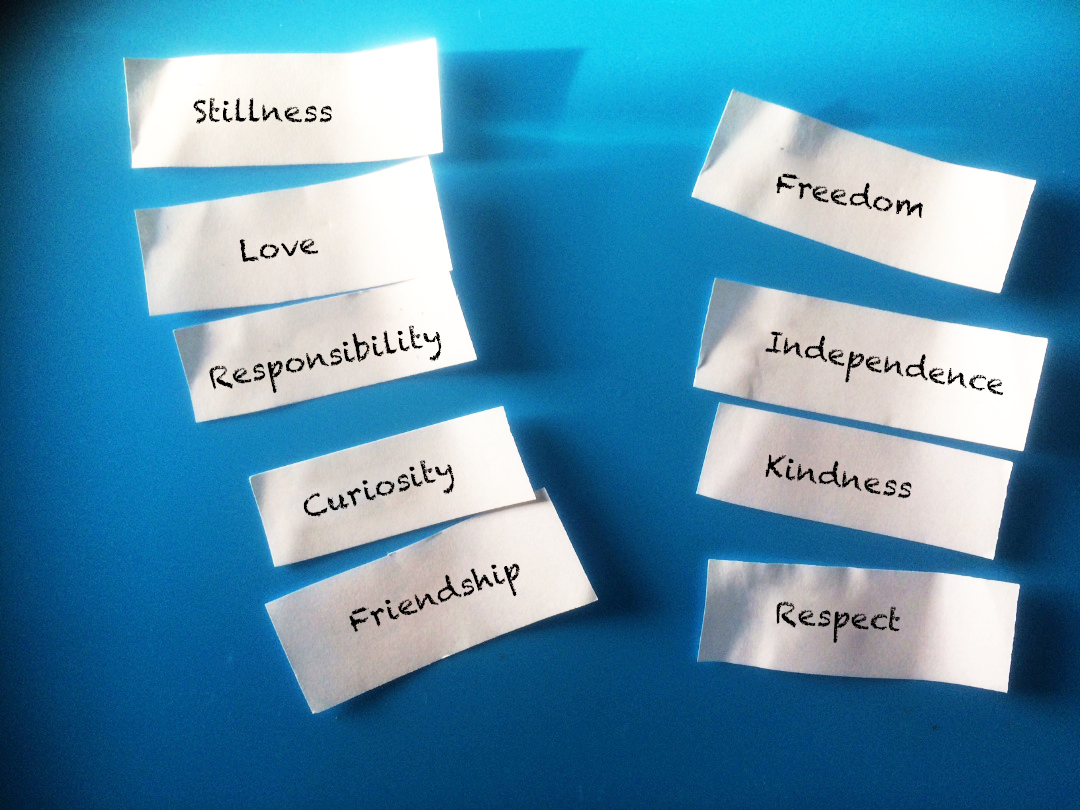
The two frames below map the exact boundaries of our internal architecture.
But when the focus of our consciousness shifts, we drop into the revealing mode…
The Practice of the Sacred Space
To live with this awareness in a Western world designed for perpetual distraction requires what Campbell calls a “sacred space.” This doesn’t require a grand cathedral or an ancient temple. For the modern operator, a sacred space is simply a deliberate perimeter—a regular pause where you intentionally step off the high-velocity hamster wheel to enrich the internal structural integrity of your system.

The Mt Aspiring Observer: Wu Wei in the Sacred Space
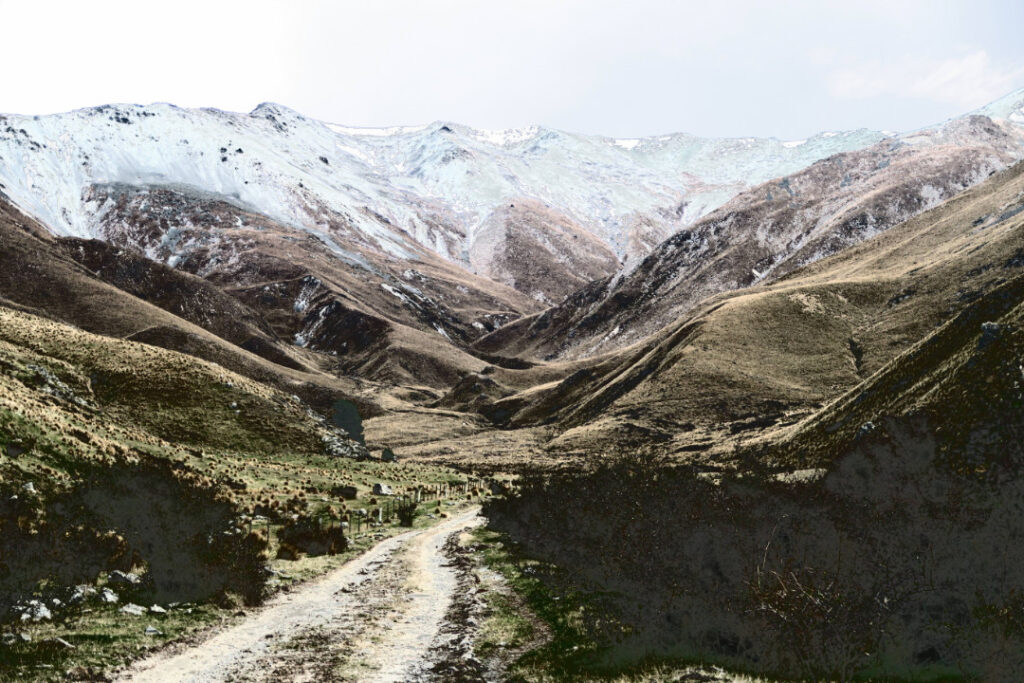
This solitude, captured beside a clear mountain stream in Mt Aspiring National Park, embodies the required setting for Campbell’s “Sacred Space.” It is not an escape from reality, but a deliberate perimeter established for the “watering of the seeds of self-awareness.”
Here, in the presence of unscripted nature, the internal static is muffled, and the capability for high-fidelity pattern recognition can be fully engaged. By listening to the inherent rhythm of the water and the silence of the valley, we begin to perceive what Aat Vervoorn describes as the innate tendency of situations.
Daoist concept of non action:
Mountain Solitudes by Aat Vervoorn
Do nothing and there is nothing that is not done by Laozi.
He means that if we come with fixed ideas and preconceptions, and try to impose our will on events, we are likely to fail.
Action succeeds when it is, in a sense, non-action, when our acts are entirely in accord with the disposition of things, so that it’s as if our desired outcomes just happen by themselves.
Successful action depends on correctly perceiving the innate tendency of situations (what does ‘the innate tendency of situations’ mean?) and understanding the importance of timing. This requires full alertness to what is going on around us and within
Navigating the Innate Tendency: Timing and Alignment
To answer the question often asked: What does ‘the innate tendency of situations’ mean? From an operator’s perspective, it means recognizing that every moment, every tense room, and every complex human interaction has an underlying momentum, an inevitable direction of flow, long before we choose to act. It is the specific current of Māyā in that second.
- High-Friction Action: Is when we arrive with fixed ideas and preconceptions, trying to force our willpower against that current. We fight the Dunedin or Wānaka traffic, try to out-muscle a volatile room, or impose a generic solution on a delicate situation. This kinetic striving is heavy, inefficient, and usually fails.
- Sovereign Action (Wu Wei): Is when we first use Aesthetic Arrest to stop our own compulsive script. We wait in full alertness, using the Sacred Space of our own calm mind to identify the unique pattern—the innate tendency—of the challenge. And then, we simply drop a precise variable into that existing flow at the perfect moment.
It is the commitment to being an observer rather than a compulsive participant.
Once this inner depth is secured, a remarkable shift occurs. You are no longer compulsively linked to the drama around you. You are disengaged from the frantic script, yet you can choose to voluntarily step back onto the floor with a sense of playful, joyous participation.
You can walk into a tense room and cleanly cut a manager’s tie in half, or ask a busy barista if she’d like your autograph, because you are no longer fighting the chaotic spectacle of life. You have recognized the harmony of your own nature, dropped your ego defenses, and found the still point in the midst of the turning world.
The Hidden Gold of the Screen
Most of us encounter Māyā exclusively in its “veiling” mode. It is the ubiquitous engine behind modern marketing, but it is far more insidious than simple consumerism. Consider social media for example and how it’s used to curate falsity in all aspects of life and politics. It dominates our day-to-day existence under the respectable guise of “being organized”—the endless optimisation of to-do lists, metrics, and calendars. This is pure, high-RPM noise masquerading as purpose, a constant measurement that keeps the veil firmly drawn over reality.
Yet, the true, hidden gold lies in Māyā’s secondary capability: its power to reveal.
To pierce that organised static and strike the underlying current is precisely where art and creativity excel. If we want to move beyond the veil, understanding the specific mechanics of the Arrest is the necessary place to start.
That, as Campbell so beautifully concluded, is the whole story.
With thankful reference to his “Companion” publication – an eBook circa 2011.
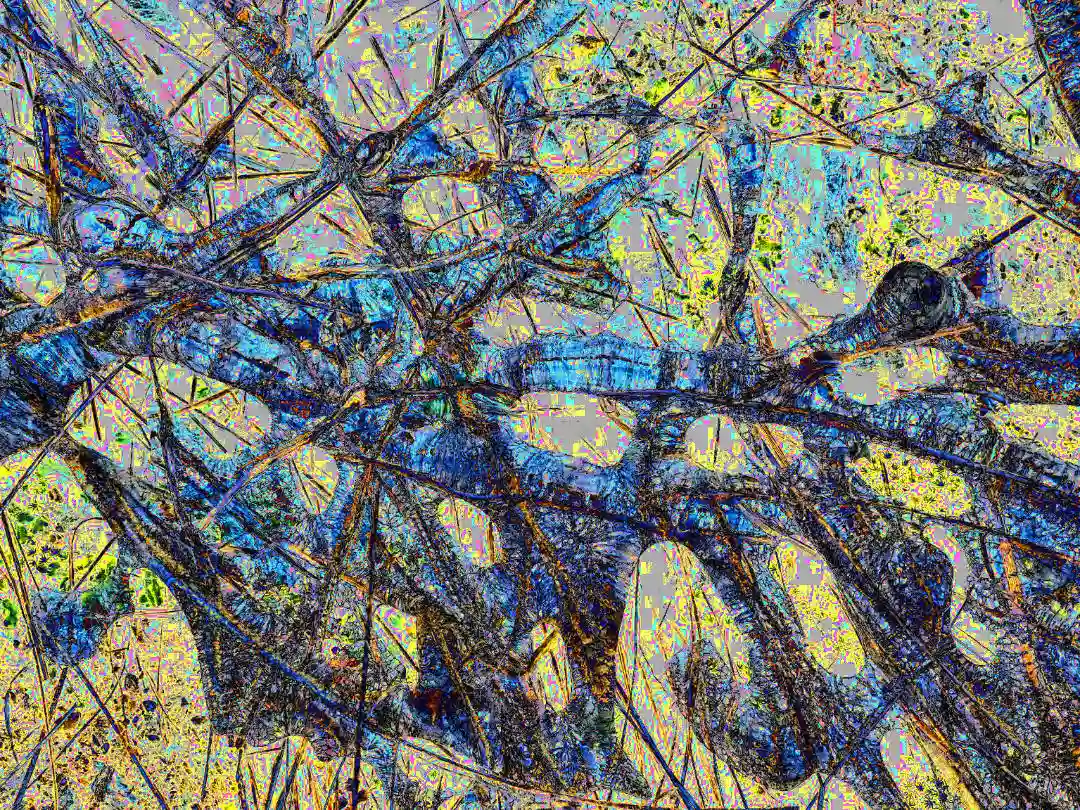
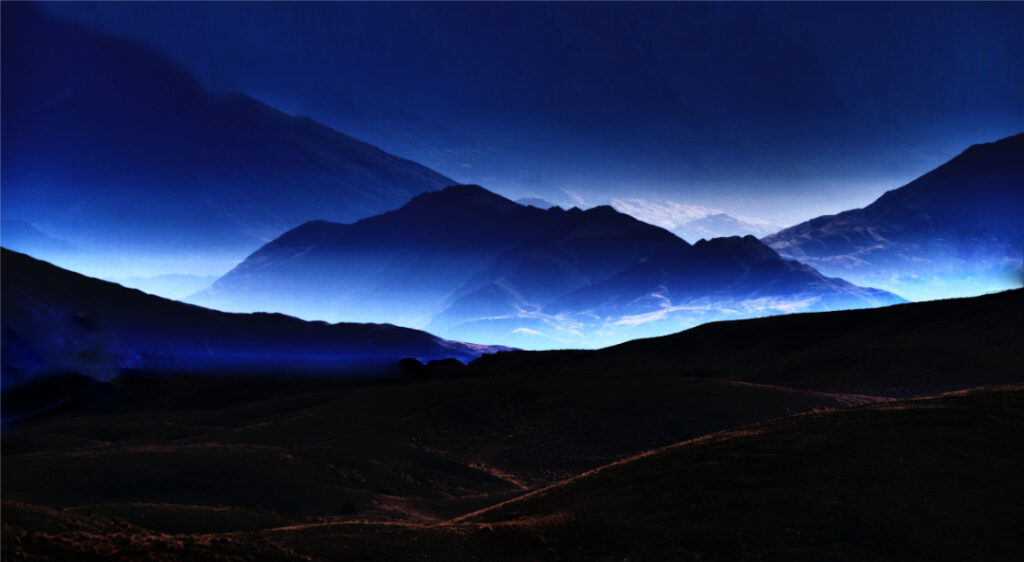
PS, the Featured Image is an ice lattice over tussock grasses.