Beyond Kurow: Overwriting the Legacy Code of Scarcity
We live in a world that prizes a few specific things that make it remarkably hard to slow down time as we age. In Western culture, at least, we invest massive amounts of energy into not losing anything.
Yet, some things are destined to leave us, or to be lost: belongings, people, and eventually, our current versions of ourselves. We treat these departures like system failures rather than scheduled maintenance. An immense uptick in efficiency would come to pass if we channeled some of this “protection” energy into gaining stillness.
Scarcity in a nutshell
Fear of loss is, at its core, a scarcity mindset. I know the “Ground Truth” of this from my own lineage. My grandmother used to say, “Here is some money, Donald. Go to the corner dairy and buy some cream for your porridge tomorrow morning.”
The next day, she’d add sugar and that cream to my breakfast. It was an act of love, but also a safeguard; she didn’t want me to grow up hungry like the generation of the 1930s. Back then, in the hills behind Kurow, depression was rife. She kept my father and uncle fed by encouraging them to hunt rabbits and forage for mushrooms—subsistence as a survival strategy.
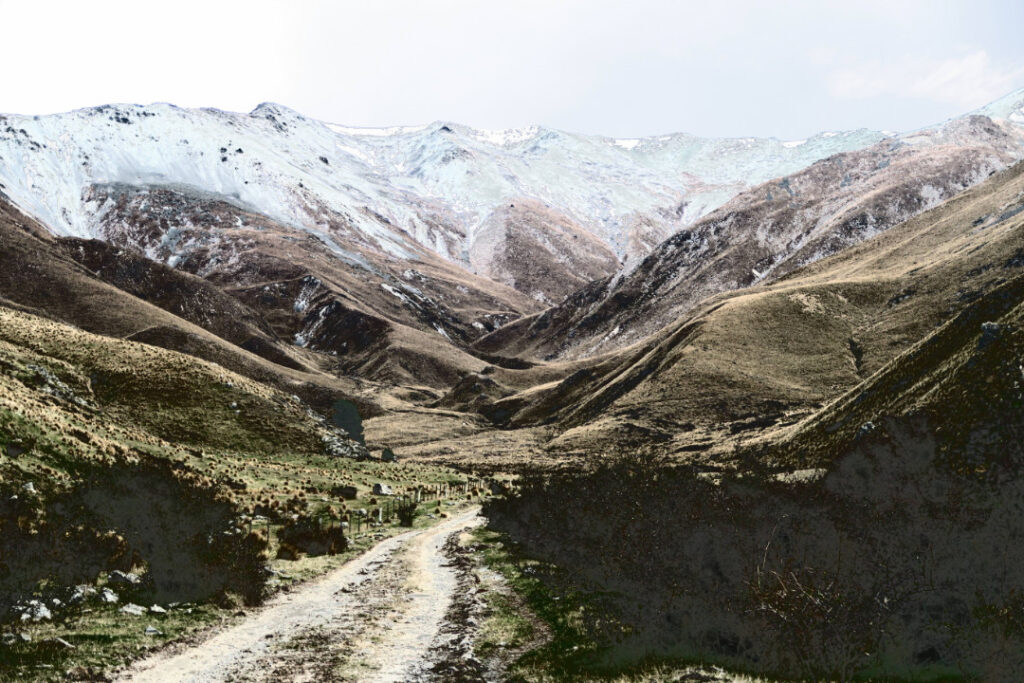
Looking to the St Marys Range behind Kurow.
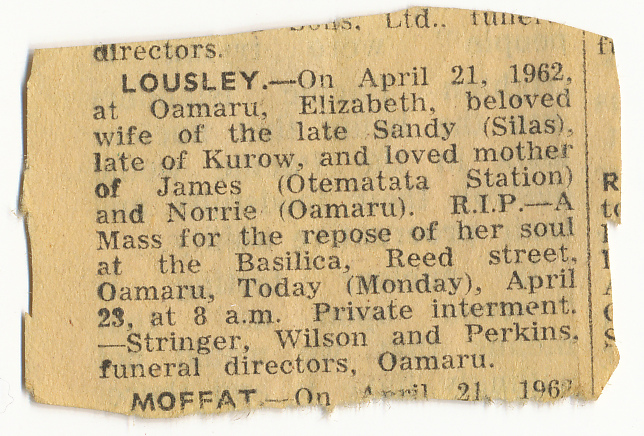
I must find a photo of her! Meanwhile I can at least honour her passing. It was at Easter and I was holidaying with my parents at Danseys Pass. She was the only grandparent I knew so it was a shock, but at least the news came while I was in one of my happy places.
Today, that scarcity is ubiquitous. It’s the “Puff” that powers our society. Marketing hinges on it: “Quick, buy this—only three left at this price!” It creates a high-RPM environment that induces “time poverty.” We are so busy clutching at what might disappear that we never question the game itself. We play the game instead of investing in our own structural integrity.
The “Bulk” Phase of Misplaced Effort
We persist in legacy behaviors because we haven’t audited the code. We see it everywhere:
- Working for assets that are destined to dissolve.
- Marrying because of a “Dead Click”—that fear of missing out sparked by a shoddy emotional web page.
- Persisting in a marriage that has become the very cage we thought we were escaping.
- Resisting Ageing—fighting a natural voltage drop instead of recalibrating the system.
- Worrying about losing a business client or a job.
- Clutching at opinions—defending a “V 1.0” worldview to avoid the friction of being proven wrong.
- Hoarding information—collecting “Puff” in the form of data we never use, instead of trusting the “Stillness” of intuition.
- Colonising the future—over-planning the next decade to suppress the anxiety of a single grey morning.
- Hoarding physical goods inc. food—the irony is that my collection of nuts and bolts etc. is so well established I so often can’t find what I want. It’s less of a burden to use the local hardware shop as a storeroom.
- In love—It manifests as the urge to compete for a partner, driven by the ‘Legacy Code’ that there isn’t enough love to go around—a high-RPM game that eventually leaves the system depleted. Competing for affection—as if the heart were a finite grid with only so many amps to spare, rather than a renewable frequency.
When we refuse to get off the merry-go-round, we fail the test of curiosity. We doom-scroll instead of writing the books we have inside us. Lacking reflection, the days blur. We batch-process the same old perceptions until we find ourselves at the local cafe, telling our mates how quickly the last year has gone by.
The Solar Parallel: Light, Storage, and Passing Clouds
Think of your life like a solar power system.
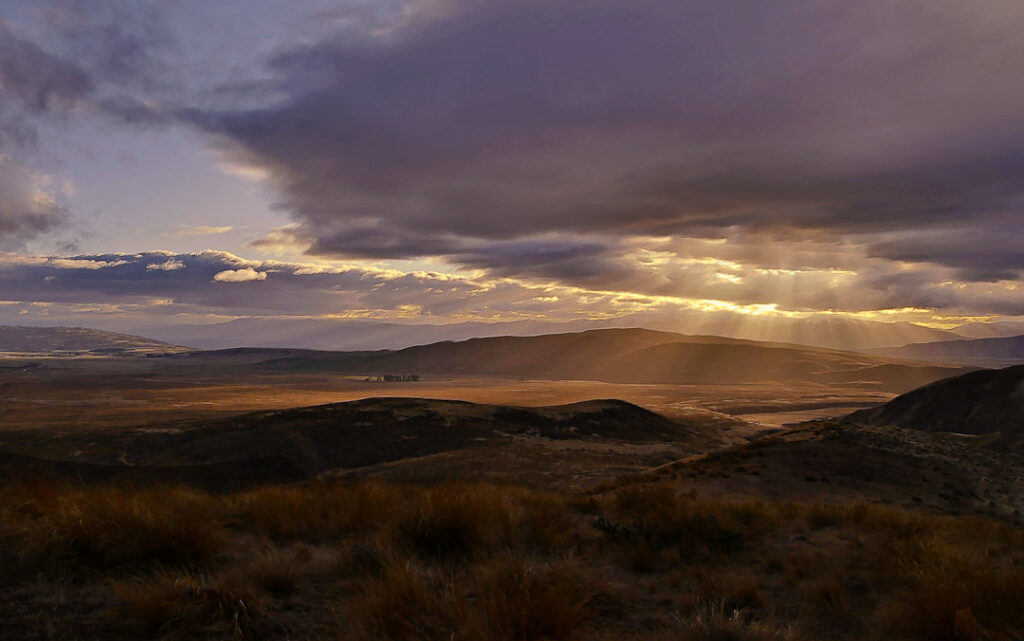
The Light is our attention—the only true currency we have. The Clouds are the inevitable interruptions: the scarcity marketing, the family dramas, the Tasman weather fronts of “busy-ness.”
If your system is V 1.1, you only harvest when the sun is glaring. When a cloud passes, your “State” drops, and you feel the “Friction” of the grey. But a V 2.0 life—one built for stillness—uses a high-efficiency MPPT solar panel controller (I’ve just installed one, digging deep into my inner geek to ensure I didn’t “miss out”). It doesn’t “clutch” at the sun; it simply harvests what is available, even in the gloom or when the shadow of a tree branch falls on the panel.
Stillness is the Battery Bank. When you have deep storage, a cloud (a loss, a setback, a rainy day) doesn’t cause a “Dead Click.” You have enough internal “Puff” to maintain your frequency until the sky clears.
The “Control”
In any experiment—and the clinical trial I’m currently part of at Dunedin Hospital reminds me of this daily—the “Control” is the constant. It’s the baseline we measure everything else against. In our lives, we often let Scarcity be the Control. We measure our success by how much we haven’t lost.
But what if Stillness was the Control?
What if we measured our day not by high-RPM output, but by the integrity of our connections and the “Windsor Air” we breathe? To some, “Windsor” might suggest a Royalist leaning (and though I’ve met the King’s sister at a school opening, my interest is in the tradition of solid ground). To others, Windsor is a Canadian city where, if you look North, you see the US—a geographical factory for lateral thinking.
When Stillness is the baseline, you realize that the “Control” isn’t about power over others, but about the Sovereign Control of your own internal grid.
It means resisting the urge to “colonise” a moment or set a hook into a relationship that is still just a beautiful probability. By suppressing that static, we become friction-free—gifted with the time to reflect and simply be our own Sovereign Lens. You stop reacting to the flickers of the meter and start observing the beauty of the harvest. Walking in nature, meditating, or praying are the ancient antidotes to scarcity. And so to is fishing. They make it hard to hold a negative thought for long. They return us to the stillness we were built for.